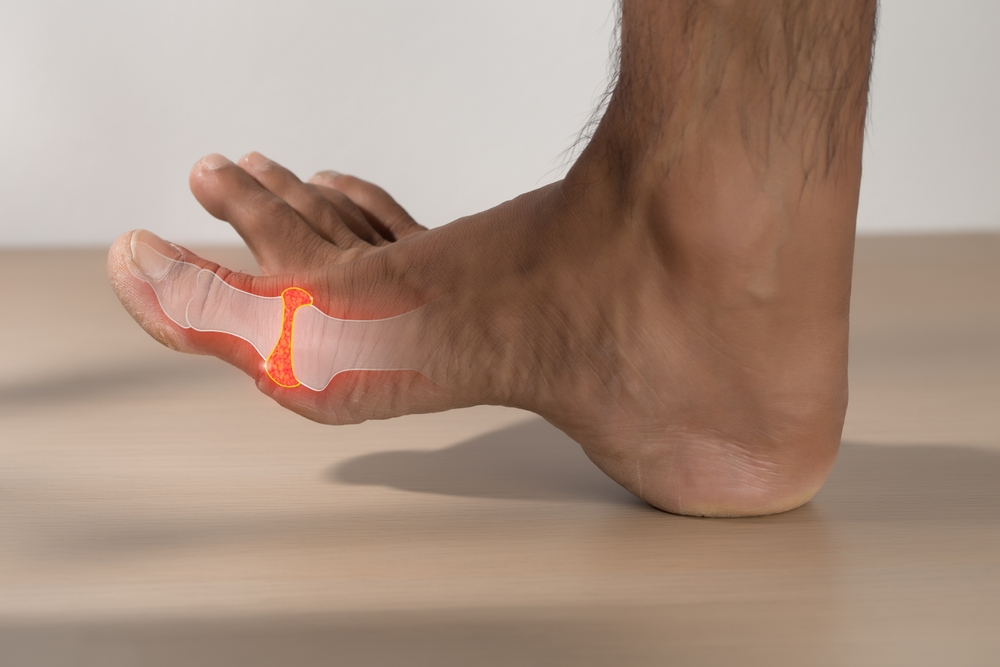
During the progression of gout, in advanced stages it manifests through the appearance of so-called gouty tophi.
Tophi are deposits of uric acid crystals in the joints, visible under the skin as nodules or swellings around a joint.
Gouty tophi can affect any joint in the body. They can be painful, destroy the affected joint, and cause irreversible functional impairment.
The stages of gout progression:
Asymptomatic hyperuricemia
Acute gout
Intercritical gout
Chronic tophaceous gout
If uric acid remains elevated for a prolonged period during the first three stages, gout progresses and becomes chronic with the appearance of tophi.
When tophi develop in the small joints of the fingers, they cause joint swelling due to crystal accumulation, leading to decreased mobility.
The accumulated crystals destroy the articular cartilage and even the bone in advanced stages, in which case the joint can no longer be saved and amputation becomes necessary.
The diagnosis of gouty tophi first requires a diagnosis of gout by a rheumatologist, followed by additional investigations (X-ray, musculoskeletal ultrasound) to determine the extent of joint involvement.
The procedure is performed under local anesthesia and involves the surgical removal of crystal deposits around the joint while preserving its integrity.
In severe cases, where the joint is practically destroyed and the bone ends have been completely damaged, amputation of the affected ray may be necessary.
Therefore, it is recommended to consult a plastic surgeon early.