Carpal Tunnel Syndrome is characterized by numbness in the first 3–4 fingers of the hand and pain that worsens at night, often relieved by placing the hand in a specific, pain-relieving position.
Physically, the main nerve of the hand — the median nerve — becomes compressed by a fibrous band.
This fibrous band is called the transverse carpal ligament. Everyone has this ligament, but with repetitive hand movements or intense physical activity (such as office work, IT, or sports), it can thicken and compress the nerve, leading to tingling and pain.
Over time, symptoms may intensify and can eventually lead to atrophy of the thenar muscles (the base of the thumb).
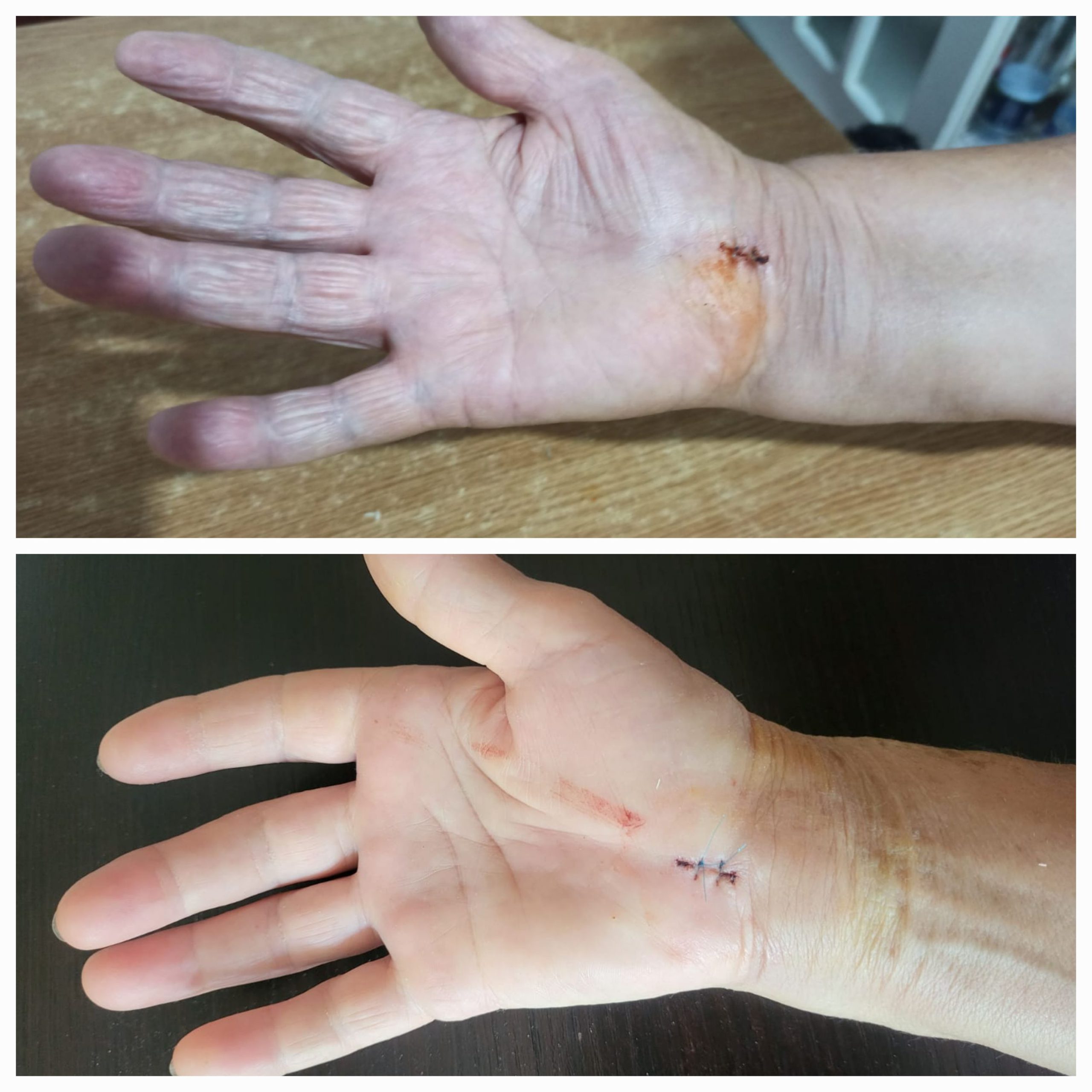
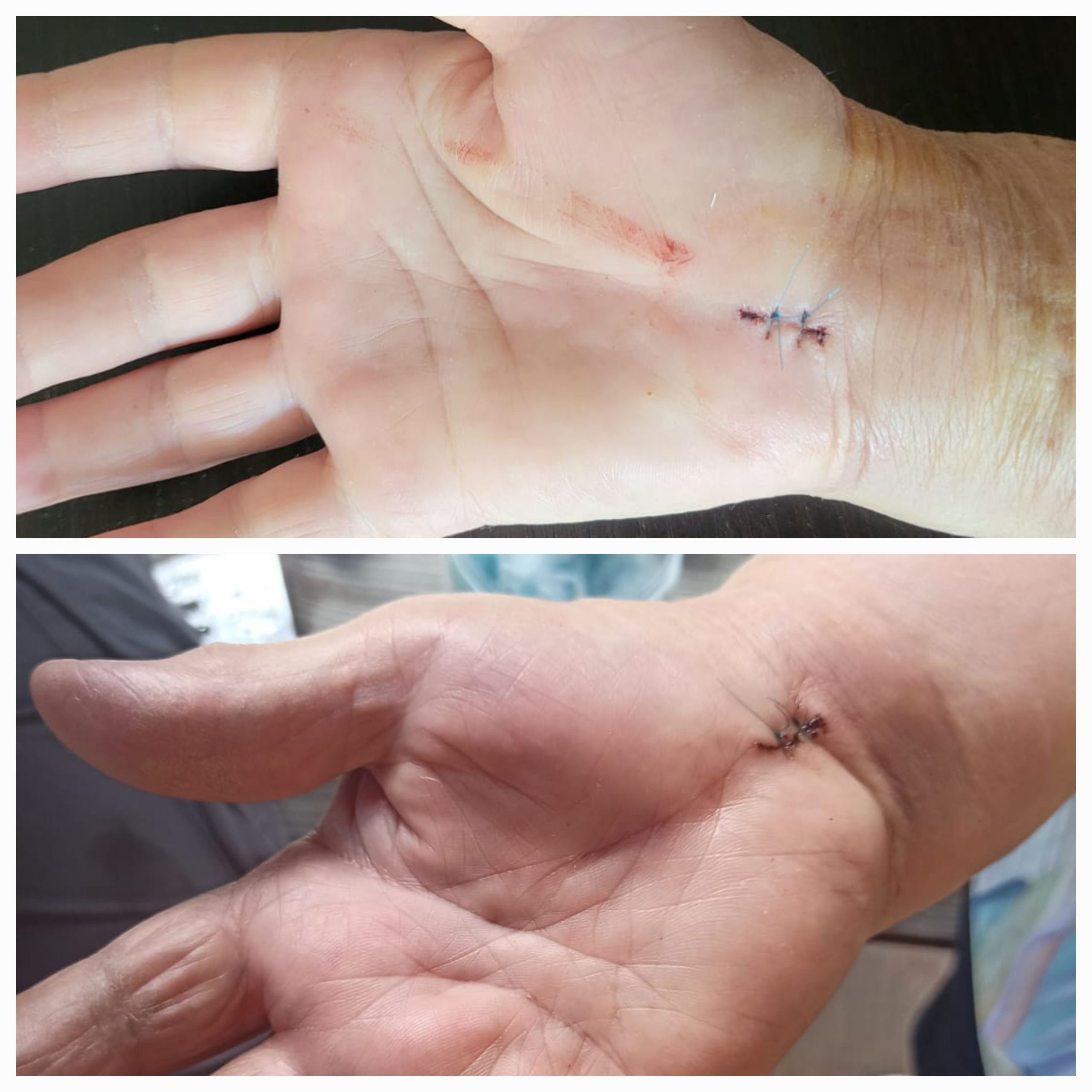
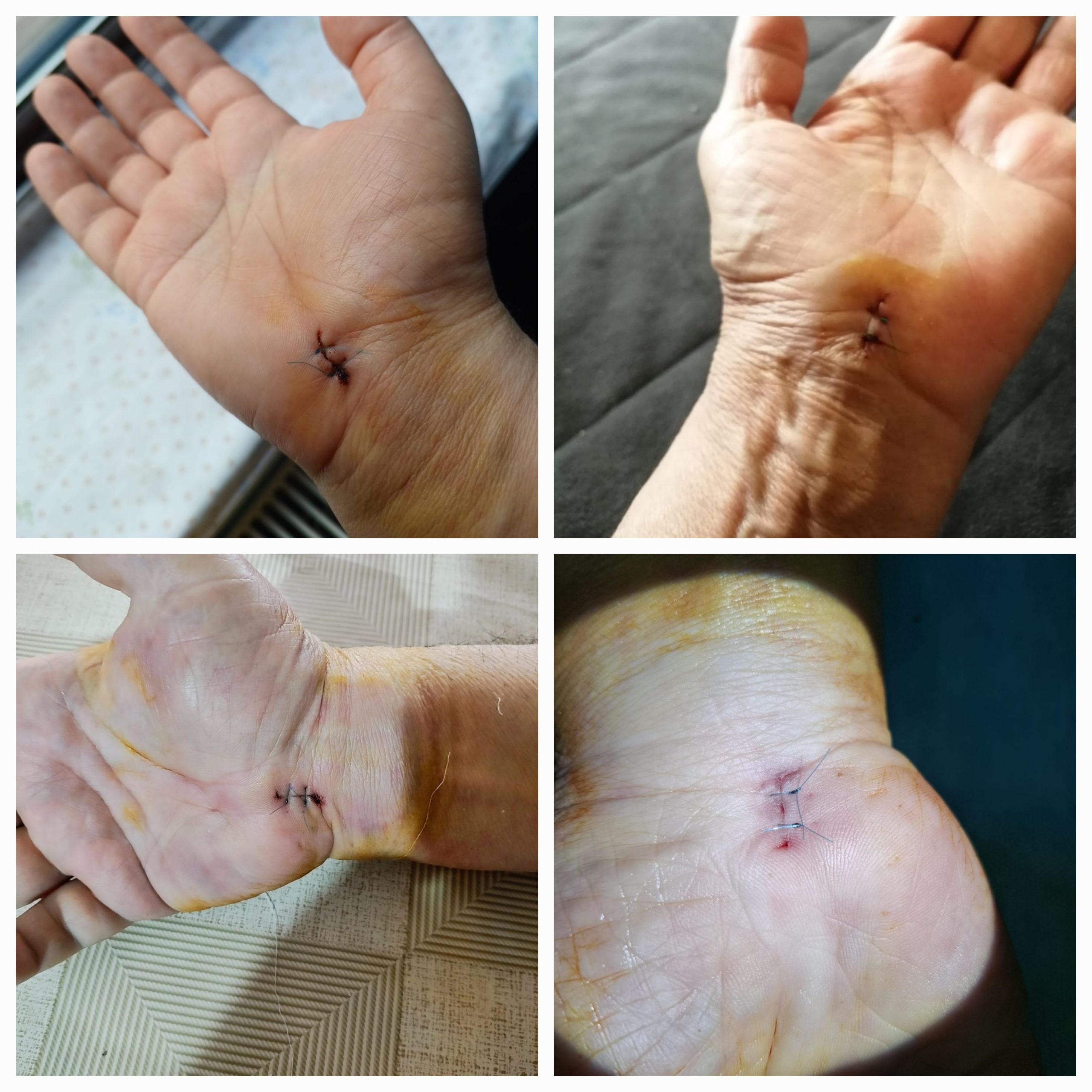
The minimally invasive surgical procedure involves a palmar incision of less than 1 cm (typically 0.8 cm), performed under local anesthesia, through which the nerve is released. The average duration of the procedure is 45 to 60 minutes.
Use of the hand 2–3 hours after the procedure (eating, personal care, driving, etc.) with lifting limited to 1.2 kg for 14 days
No specialized medical rehabilitation required in 90% of cases
Steristrips/plaster bandage removed 2–3 days after surgery
*(Loc de videoclip)
Dr. Simion Răzvan’s Expertise
Dr. Simion Răzvan has extensive experience in minimally invasive surgical decompression of carpal tunnel syndrome under local anesthesia, successfully performing over 100 documented cases.