We discreetly treat a common but bothersome problem.
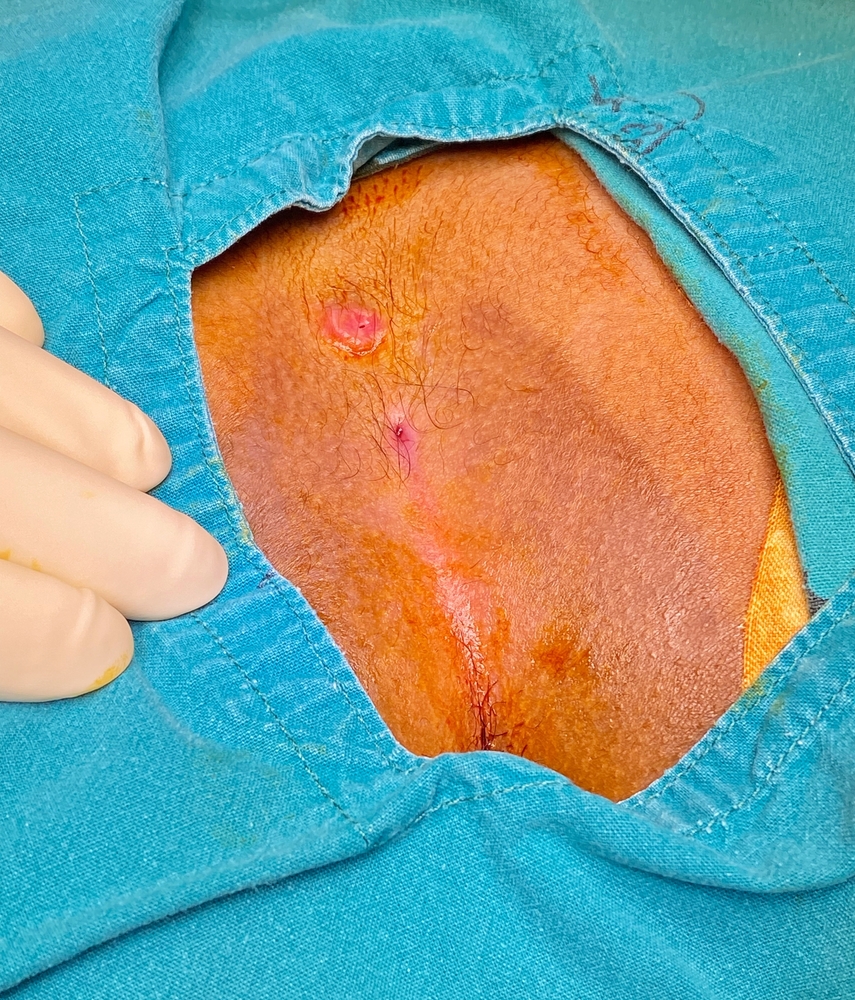
Pilonidal disease is a condition affecting the skin of the intergluteal region.
It can present in two forms:
a) Pilonidal sinus, a small tunnel that communicates with the external environment.
b) Pilonidal cyst, a sac filled with fluid.
This pilonidal sinus or cyst can be painful or asymptomatic, may contain hair follicles, and often becomes infected, leading to the formation of an abscess.
When the pilonidal sinus/cyst becomes infected, it causes symptoms such as:
Risk factors for the development of pilonidal disease include:
Ingrown hairs that grow beneath the skin, causing inflammation and subsequent infection;
Tight pants;
Prolonged sitting, whether on a chair or bicycle.
Surgical treatment
The treatment of pilonidal disease is surgical, performed under local anesthesia, involving an incision and evacuation of the purulent collection, as well as excision of the cystic sac to prevent recurrence.
The first postoperative check-up and dressing change take place 2-3 days after surgery, and suture removal occurs at 14 days.
Along with the surgical excision, the patient undergoes antibiotic and anti-inflammatory treatment.