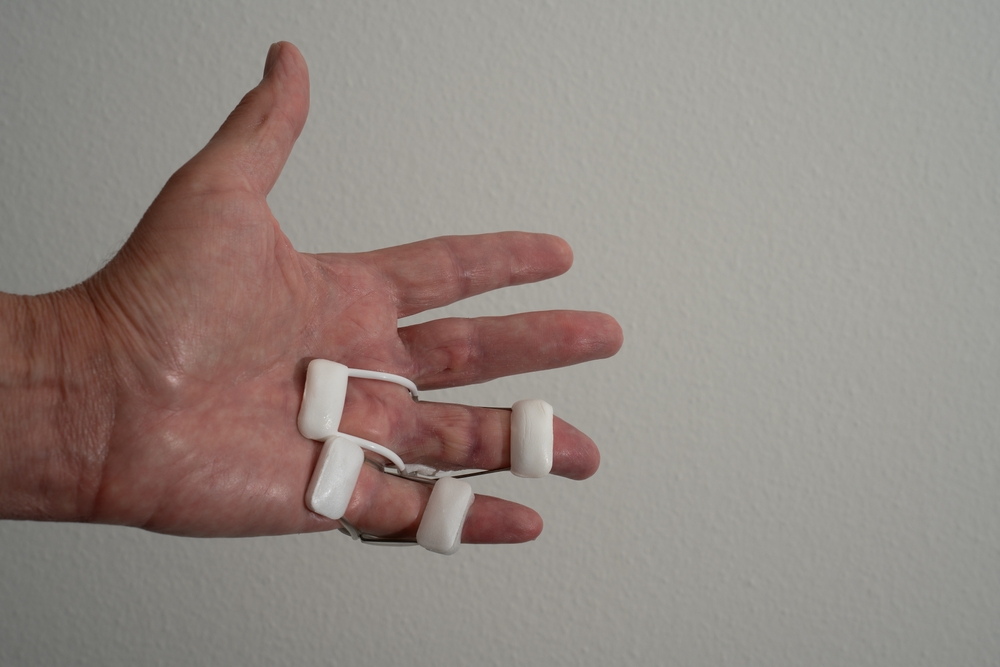
Dupuytren’s disease is a condition that affects the palmar fascia – the fibrous tissue layer located just beneath the skin and above the tendons, nerves, blood vessels, and bones.
In patients with Dupuytren’s disease, the fascia thickens and contracts (shortens), leading to flexion contracture of the finger(s), most commonly the third and fourth fingers.
The most common causes of Dupuytren’s disease are male gender, intense and repetitive physical effort, diabetes mellitus, alcohol consumption, and genetic inheritance.
The treatment is surgical, aiming to restore hand function, improve quality of life, and prevent disability.
A procedure called fasciectomy is performed, meaning the thickened fibrous fascia is excised, releasing the affected finger while preserving the integrity of the neurovascular bundles. The surgery is done under local anesthesia and lasts approximately 60 minutes.
The patient can go home the same day, with a follow-up appointment 2–3 days postoperatively, and stitch removal takes place at 14 days.