Tender care for wounds that hurt beneath the skin
A burn is a traumatic injury caused by various possible agents (thermal, chemical, mechanical, or electrical) and can involve different layers of the skin depending on the burn’s severity.
Clinical assessment is based on:
Evaluation of the burned body surface area
Estimation of the burn depth
Depending on the depth, burns can be classified into three types:
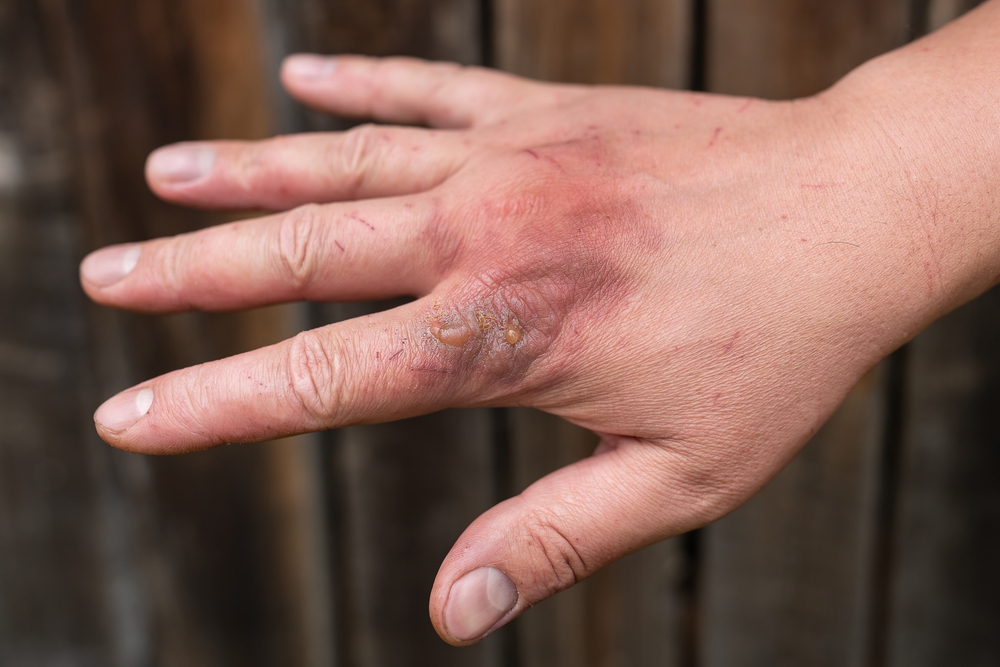
First-degree burns
Corresponds to a superficial burn. The affected area appears red and is painful.
The best example of a first-degree burn is a sunburn. Only the superficial layer of the epidermis is damaged.
When a large surface area of the body is involved, complications such as cerebral edema may occur, but generally, burns of this degree are easy to treat.
Second degree burns
There are two subcategories of second-degree burns: IIA and IIB.
Grade IIA is characterized by the appearance of blisters, which form a few hours after the injury.
If the blister is removed, the underlying burn appears as an intensely red and uniform area, and the pain is severe, making it difficult even for the plastic surgeon to touch.
Healing time is relatively short, usually within the first 2 weeks after the injury, without leaving lasting aesthetic scars.
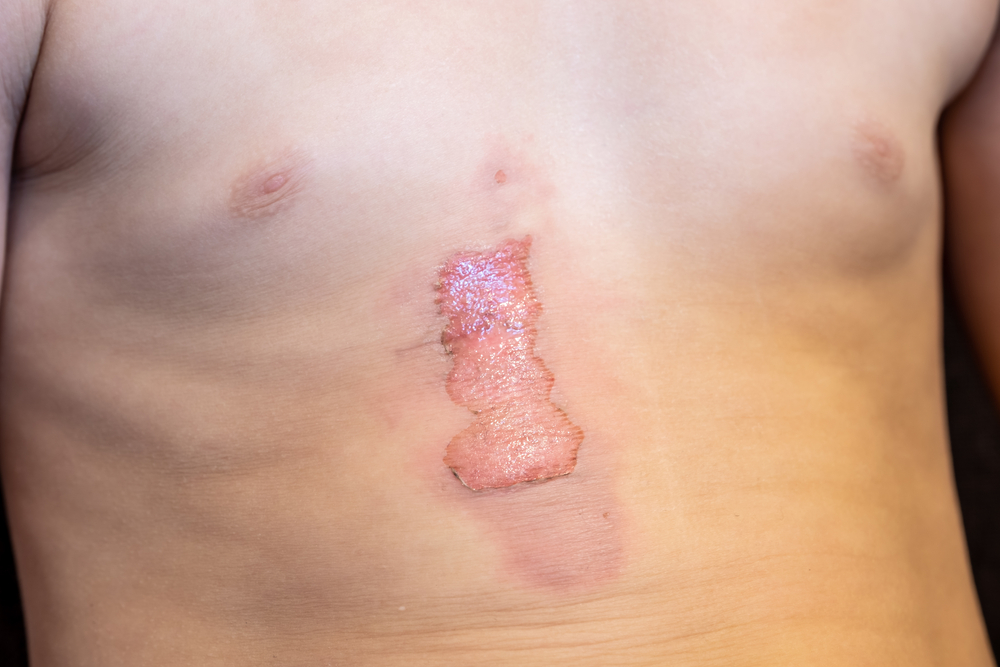
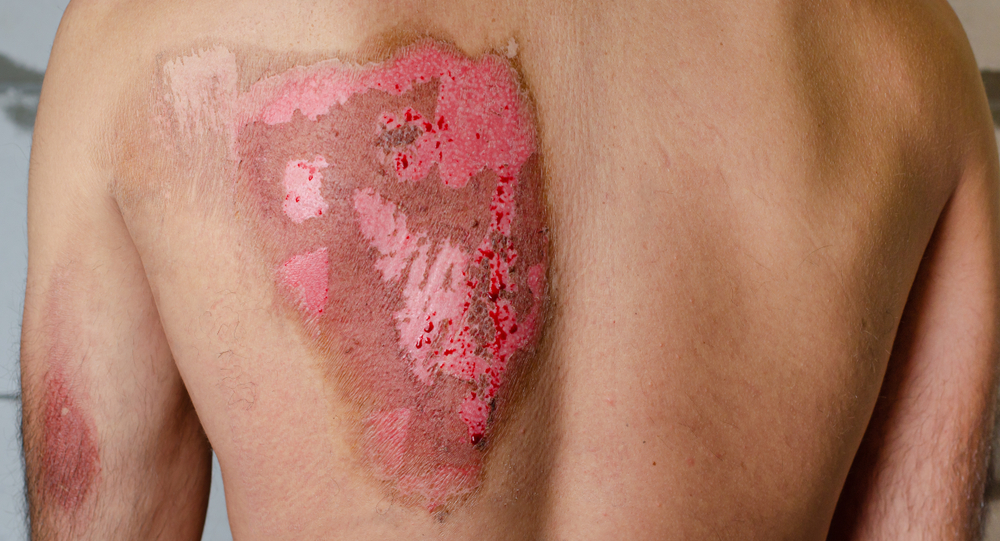
Grade IIB burns also present blisters, but after they are removed, the burned skin appears white or resembles a checkerboard pattern.
The pain upon touch is less intense compared to more superficial burns due to partial destruction of nerve endings.
These burns either tend to heal spontaneously within about 2-3 weeks or may progress into a third-degree burn, requiring excision and grafting.
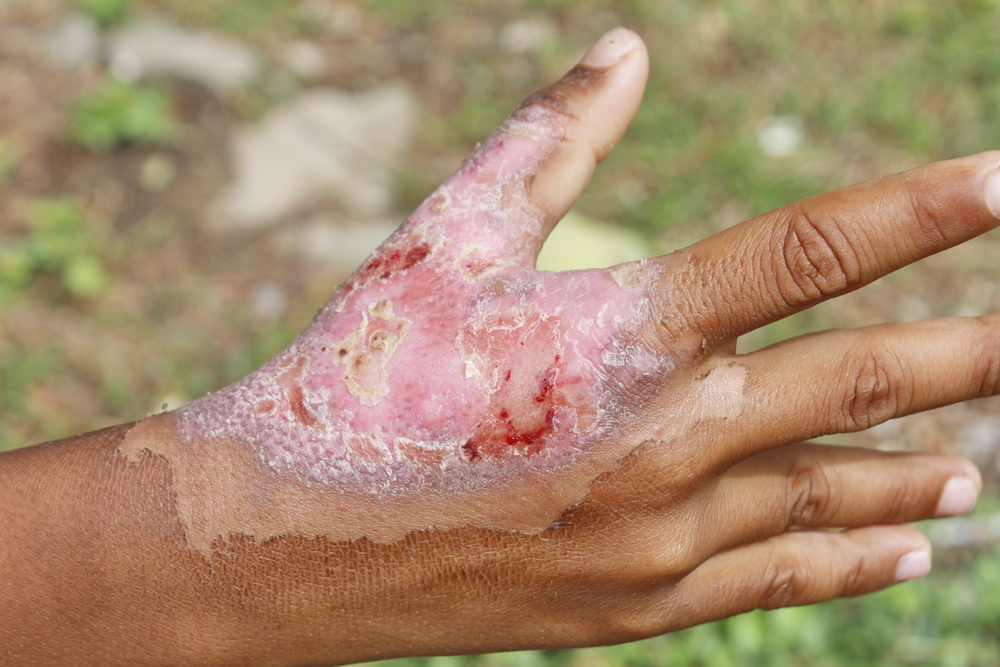
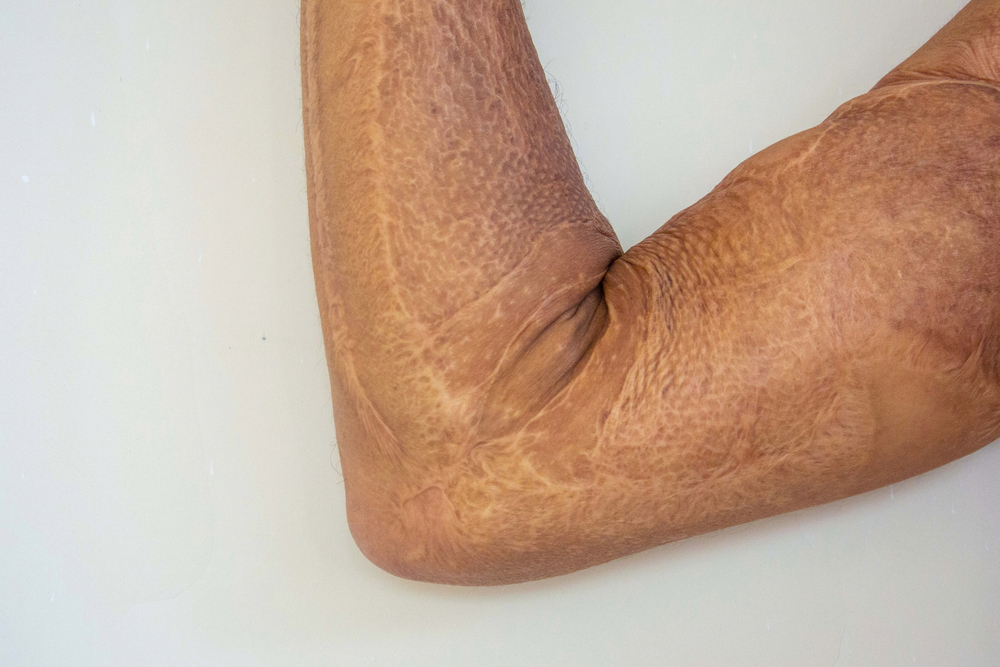
Assessing the vital risk by the plastic surgeon is an extremely important step and is determined based on the burn’s surface area, location, the patient’s age, and comorbidities.
This type of burn does not heal spontaneously and requires excision and grafting.
In conclusion, it is crucial to have the burn evaluated by a plastic surgeon to establish a clear treatment plan.
Additionally, burn dressing is a complex process and is recommended to be performed by the plastic surgeon.
Before/ After
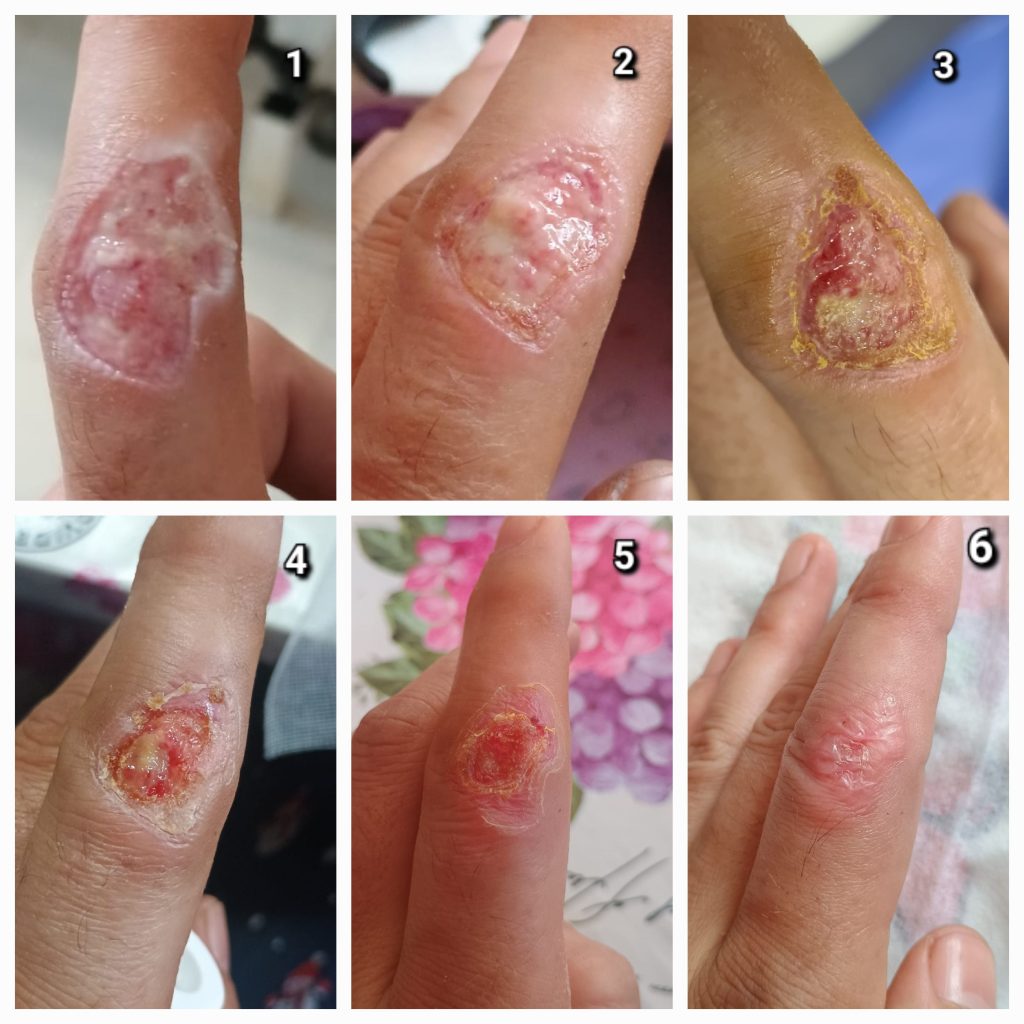
Before/ After
The comparative photograph illustrates the local progression of a properly treated burn. In the image labeled “before,” an extensive skin lesion is visible, characterized by erythema, edema, and vesiculation.
The “after” image shows advanced healing, with restoration of skin integrity, resolution of inflammation, and minimal scarring. The result reflects the effectiveness of the therapeutic intervention and adherence to the care protocol.

